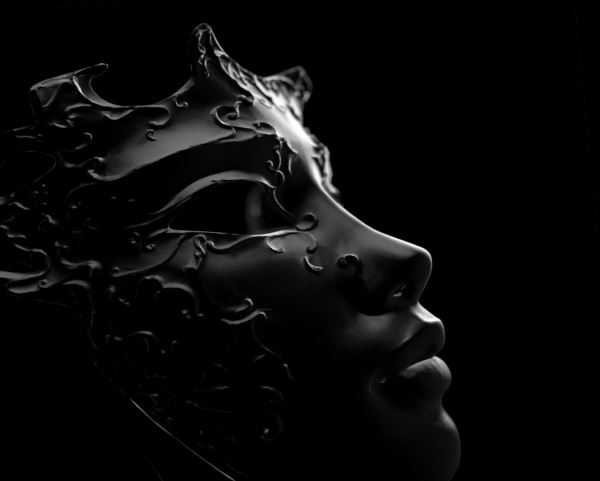
Photo in the color Onyx
Pictured: Onyx, the closest color we have a photo of (#0F0F0F)
rgb(26, 17, 16)
#1A1110

Licorice #1A1110 RGB Color Code

Licorice (#1A1110) is a very dark neutral gray. In RGB it is made of 10% red, 7% green and 6% blue (R 26, G 17, B 16). The red channel is the strongest. In HSL it has a hue of 6°, 24% saturation and 8% lightness. Its relative luminance is 0.007, so white text is easier to read on top of it. For print, a rough CMYK match is 0% cyan, 35% magenta, 38% yellow and 90% black. Check it against your printer's ICC profile before you print. It is a neutral color. It goes well with warm oranges and reds for contrast. For a calm, matching look, use nearby cool tones.

Open in color picker

Licorice color codes

#1A1110 in every common color format. Click a value to copy it.

FormatValueNotesCopy
HEX #1A1110 Valid CSS
RGB rgb(26, 17, 16) Valid CSS
HSL hsl(6, 24%, 8%) Valid CSS
HSV / HSB hsv(6, 38%, 10%) Not a CSS format
HWB hwb(6 6% 90%) Valid CSS
CMYK cmyk(0%, 35%, 38%, 90%) Approximate (no ICC profile)
OKLCH oklch(18.91% 0.0154 25.86) Valid CSS
OKLab oklab(18.91% 0.0138 0.0067) Valid CSS
CIELAB lab(5.99% 4.08 2.04) D50, as in CSS
CIELCH lch(5.99% 4.56 26.61) Valid CSS
Display P3 color(display-p3 0.0965 0.0681 0.0639) Valid CSS
XYZ (D65) color(xyz-d65 0.0072 0.0066 0.0058) Valid CSS
Decimal 1708304 Integer (0xRRGGBB)

CMYK here is a rough screen match without an ICC profile. See CMYK and print. Relative luminance: 0.0066. Nearest web-safe color: #330000.

Mix Licorice with other colors

See what #1A1110 makes with red paint, under a green light, printed with cyan ink and in a digital blend with blue. Click a picture to change the colors and amounts in the color mixer.

Use Licorice in your code

Ready to paste into CSS, Sass, Tailwind, iOS, Android and Flutter. Click the icon to copy a line.

WhereCodeCopy
CSS variable--licorice: #1A1110;
Sass variable$licorice: #1A1110;
Tailwind CSS v4@theme { --color-licorice: #1A1110; }
Tailwind CSS v3 configcolors: { 'licorice': '#1A1110' }
SwiftUIColor(red: 0.102, green: 0.067, blue: 0.063)
UIKitUIColor(red: 0.102, green: 0.067, blue: 0.063, alpha: 1)
Android XML<color name="licorice">#FF1A1110</color>
Flutter and Jetpack ComposeColor(0xFF1A1110)

Accessibility and contrast

White text works best on #1A1110 (18.56:1, AAA). Here is how #1A1110 does as a text color:

Large heading text
Body text at 16px. The quick brown fox jumps over the lazy dog.
18.56:1 on white
APCA Lc 105
AAA
Large heading text
Body text at 16px. The quick brown fox jumps over the lazy dog.
1.13:1 on black
APCA Lc 0
Fails AATry #7E7170

Check this color against any background in the contrast checker. WCAG ratios and APCA Lc values measure different things, so one can't stand in for the other. Learn more.

How people with color blindness see Licorice

#1A1110 next to its complement and its two triadic colors, as seen with each type of color blindness.

  • Normal visionhow most people see it
  • Protanopiano red cones, about 1% of men
  • Deuteranopiano green cones, the most common type
  • Tritanopiano blue cones, very rare
  • Achromatopsiano color at all, very rare

#1A1110 has almost no hue, so it looks much the same with every type of color blindness. Only its lightness counts. Try your own colors in the color blindness simulator.

About the color Licorice

A crayon that smelled like candy

Licorice was a scent in Crayola's Magic Scent crayons. The first 16-pack came out in 1994, and each crayon gave off a smell as you drew. A year later Crayola changed some scents, because parents said crayons like Cherry and Chocolate smelled good enough to eat. You can read about the set in the list of Crayola crayon colors.

Where #1A1110 comes from

Older versions of that Wikipedia list gave the Licorice crayon the code #1A1110, a black with a slight red-brown tint. Newer versions say the crayon was simply Crayola's black, #000000. So #1A1110 is best seen as an estimate, not an official Crayola value.

On screen, licorice is about as dark as smoky black. White text on it scores 18.56 to 1. For other near blacks, compare eerie black.

Licorice in a user interface

A sample app screen with #1A1110 as the main color, on a light and a dark theme.

Light theme

Dark theme

Buttons and bars use #1A1110 as it is. On the dark theme, #1A1110 is too hard to read as text (1.05:1), so links, the badge and outline text use #8A7D7C there (4.49:1). Build a full color scheme around it in the UI color preview.

Color harmonies for Licorice

These schemes turn the hue of #1A1110 around the color wheel. Each swatch links to its own page.

Complementary

Two colors on opposite sides of the wheel. This gives the most contrast.

Open palette

Analogous

Hues that sit next to each other and look good together.

Open palette

Triadic

Three hues spaced evenly around the wheel. Bold, but still balanced.

Open palette

Split complementary

A base color plus the two hues on each side of its opposite. Strong contrast that clashes less.

Open palette

Tetradic (rectangle)

Two pairs of opposite colors. Let one color lead and use the others less.

Open palette

Square

Four hues 90° apart, spread evenly around the wheel.

Open palette

Monochromatic

One hue at different levels of lightness and saturation.

Open palette

Gradients with Licorice

Four CSS gradients made from #1A1110. Copy the code, or open one in the gradient generator to change it.

Soft tint

From a pale tint to the full color.

background: linear-gradient(90deg, #CCC9C9, #1A1110);

Edit in the gradient generator

Deep shade

The color fading into a dark shade.

background: linear-gradient(180deg, #1A1110, #020101);

Edit in the gradient generator

Analogous

Its two neighbors on the color wheel.

background: linear-gradient(135deg, #1A1014, #1A1110, #1A1610);

Edit in the gradient generator

Triadic

A bold blend with a triadic color, through a clean middle.

background: linear-gradient(135deg, #1A1110, #161611, #101A11);

Edit in the gradient generator

Shades, tints and tones of Licorice

Shades are darker, tints are lighter and tones are grayer. We make them in OKLCH so the steps look even. Hover a step to see its code, or click it to open it.

Design system scale (50 to 950)

Licorice sits at step 950. Export the full scale as CSS variables or Tailwind tokens from the picker.

  1. 50
    FAF5F5
  2. 100
    F1EBEA
  3. 200
    E1D8D7
  4. 300
    C9BEBD
  5. 400
    ACA09E
  6. 500
    8F8381
  7. 600
    746967
  8. 700
    5D5251
  9. 800
    49403F
  10. 900
    352F2E
  11. 950
    1A1110

Closest RAL, Tailwind and CSS colors

The nearest match to #1A1110 in three color systems that designers and builders use.

ΔE is the distance in OKLab: under 2 is hard to see, over 10 is a clearly different color. Browse all RAL colors, the Tailwind palette or the 148 CSS color names. RAL values on screens are only a guide, so check a real color chart before you order paint.

The named colors that look closest to this one (ΔE in OKLab). Browse all shades of gray or search the color library.